
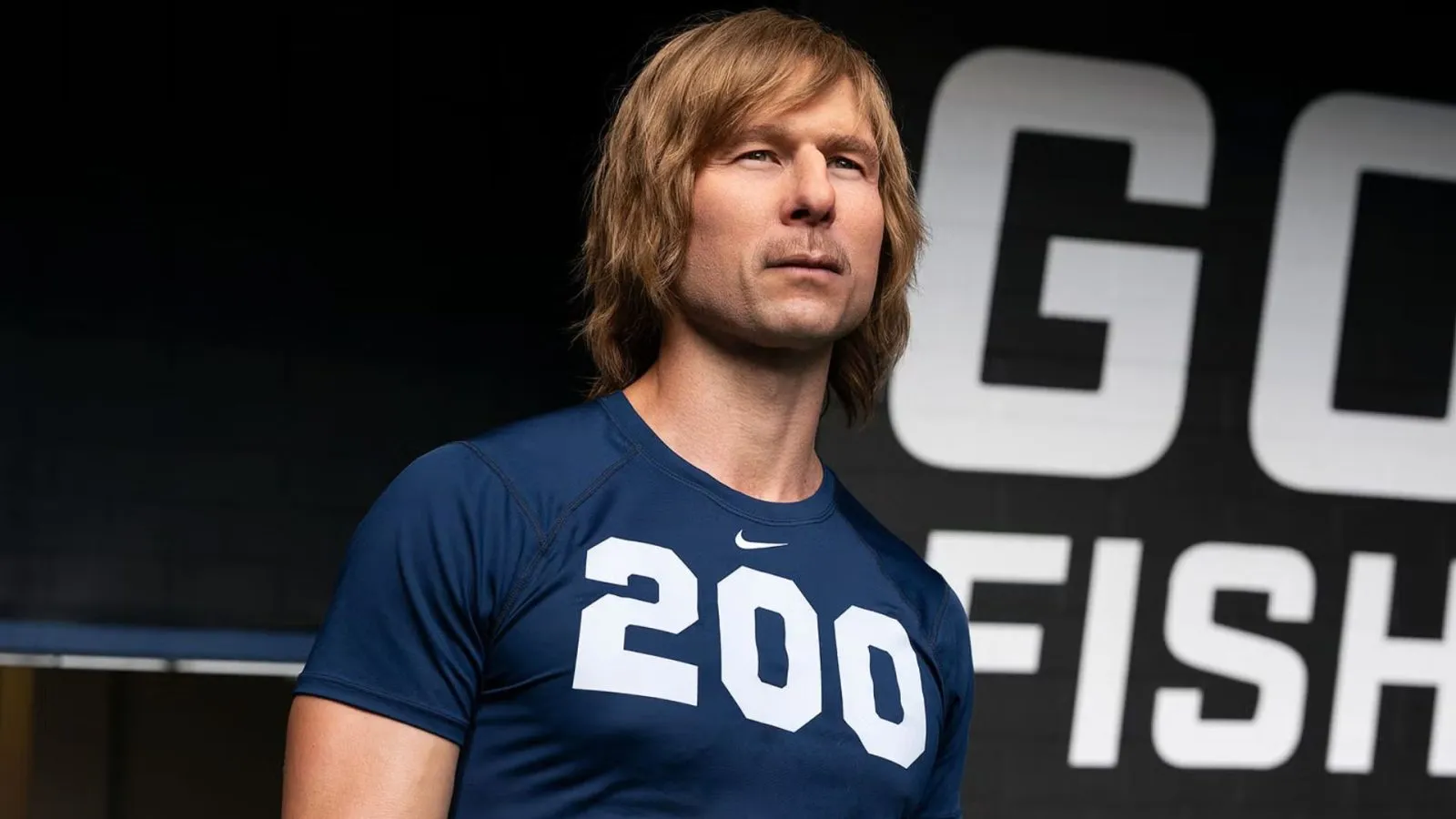
While Ted Lasso explores themes of forgiveness, Hulu’s Chad Powers focuses on delusion and the absurdity of second chances. Co-created by Glen Powell and Michael Waldron, the series turns a viral Eli Manning skit into a blend of satire and sincerity. With influences from Tootsie and The Waterboy, the show relies on Powell’s charm, making its improbable story unexpectedly engaging.
Glen Powell plays Russ Holiday, a once-arrogant quarterback undone by public outbursts, arrogance, and an incident with a fan in a wheelchair. Years later, he seeks redemption or reinvention by creating the persona of Chad Powers, complete with prosthetics and a fabricated Southern charm. The series uses this transformation to explore America’s obsession with self-reinvention in both absurd and occasionally heartfelt ways.
Russ’s Chad Powers Persona Faces Challenges, Deception, And Triumph Amid Fragile Team Dynamics
Russ-as-Chad joins the struggling South Georgia Catfish as a walk-on quarterback. Assisted by the overzealous mascot Danny, he navigates small-college football’s muddy fields, cheap uniforms, and misplaced optimism. While he impresses with uncanny throwing skills, his ego begins to resurface, and his interactions with Coach Hudson and the coach’s daughter, Ricky, hint at the fragile foundation of his disguise.
 Chad Powers (Hulu)
Chad’s mask starts to slip during social situations, like a team barbecue and pool party, drawing Ricky’s curiosity. As the season begins, the team’s star quarterback, Gerry, falters, forcing the coaches to reluctantly put Chad in the game. He leads the Catfish to victory using Ricky’s daring strategy, but the triumph is built on deception, foreshadowing the eventual collapse of his fabricated identity.
Russ’s Dangerous Deception Unravels, Forcing Truth, Redemption, And Consequences Amid Escalating Chaos
Russ’s obsession with maintaining his Chad Powers persona escalates, leading to reckless acts like car theft, hospital break-ins, and dangerous stunts. Ricky begins piecing together the truth about Chad, and Russ urges her to reconcile with her estranged father. Meanwhile, the Catfish remain undefeated, but the constant pressure of lies and impending exposure wears on him, threatening both his physical and emotional stability.

Complications arise when Chad hooks up with a stranger, later revealed as Coach Hudson’s wife, Wendy, sparking a public scandal. Hudson suffers a heart attack amid the chaos, forcing Russ to confront the consequences of his deception. This climax blends comedy with drama, forcing Russ to prioritize saving Hudson over maintaining his fabricated identity, and bringing Ricky closer to understanding the truth.
In the finale, Russ reconciles with his father and returns to the Catfish locker room, still in disguise, to applause that celebrates Chad Powers rather than himself. Ricky recognizes the truth and confronts him, highlighting the bittersweet nature of his second chance: he is given the opportunity for redemption, yet the acclaim belongs to a myth. The show’s conclusion emphasizes that identity must be earned, not fabricated, while leaving the audience both satisfied and unsettled.