
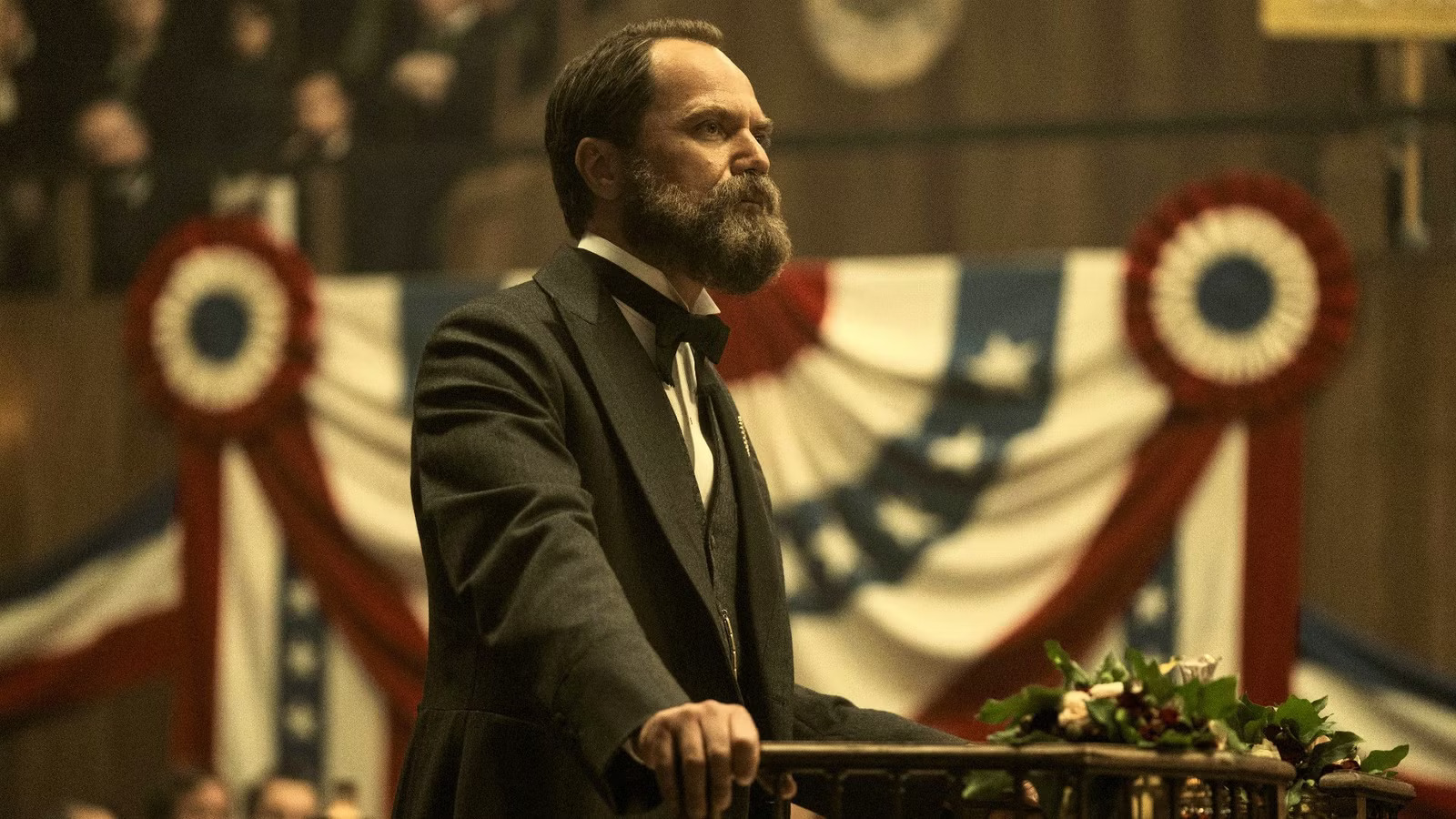
James A. Garfield served as president of the United States for only 120 days before being shot by Charles Guiteau, a disgruntled and delusional office seeker. He lingered for another 80 days before dying from his wounds, making his presidency one of the shortest and most tragic in American history.
The Netflix limited series Death by Lightning revisits Garfield’s life, death, and enduring significance, arguing that although his presidency was brief, its unrealized potential makes it one of the great “what-ifs” in American history. Based on Candice Millard’s nonfiction book Destiny of the Republic, the series contends that Garfield’s story mattered far beyond his lifetime.
According to creator Mike Makowsky, Garfield was a president far ahead of his time, particularly in his political ideals. Prior to adapting Millard’s book, Makowsky was largely unaware of Garfield’s legacy, but came away convinced that Garfield could have been among America’s greatest presidents.
Portrayed by Michael Shannon, Garfield is shown as a thoughtful, principled leader confronting a nation still fractured by the Civil War. His presidency unfolded during a period of deep political tension, corruption, and unresolved questions about civil rights, particularly for newly freed Black Americans.
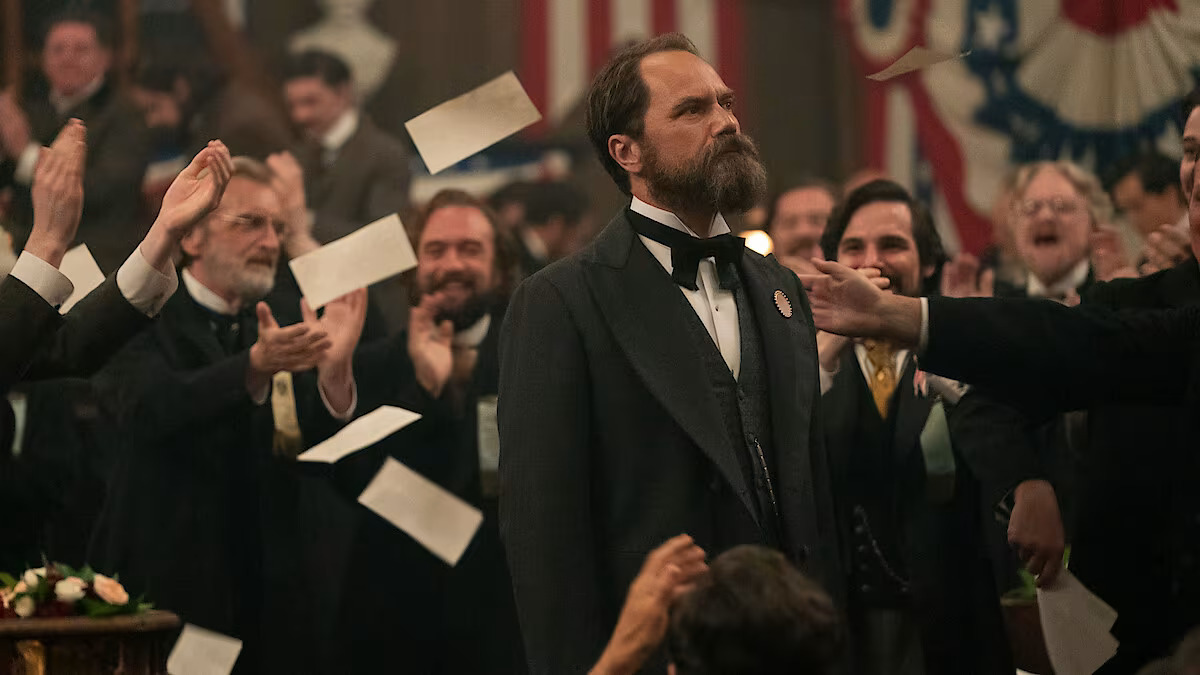 Death By Lightning (Slater Hall Pictures)
Reluctant Leadership Political Division And A Destabilizing Figure Rising In Parallel
Garfield did not actively seek the presidency. In an era before direct primaries, he emerged unexpectedly at the Republican National Convention after delivering a powerful speech nominating another candidate. That speech ignited widespread support and carried him to the top of the ticket despite fierce competition from seasoned political figures, including Ulysses S. Grant.
The series leaves open the question of Garfield’s ambition: while he claimed reluctance, his intellect, eloquence, and moral vision suggested a man capable of leadership. What mattered most, however, were his intentions to govern with integrity and reform a broken system.
Garfield inherited a Republican Party divided between the reform-minded “Half-Breeds” and the patronage-driven “Stalwarts.” The latter supported the entrenched spoils system, which rewarded loyalty with government jobs regardless of merit.
To unify the party, Garfield selected Chester Alan Arthur, a Stalwart ally of Senator Roscoe Conkling, as his vice president. Though Arthur initially embodied the corruption Garfield opposed, the relationship between the two men would prove transformative, particularly after Garfield’s death.
Running parallel to Garfield’s rise is the descent of Charles Guiteau, portrayed by Matthew Macfadyen. Guiteau was a restless drifter plagued by lifelong rejection and grandiose delusions. He failed as a writer, preacher, and commune member even being ostracized from the Oneida Community’s free-love experiment. Desperate for validation, Guiteau latched onto politics, convincing himself that he was personally responsible for Garfield’s election and thus entitled to a prestigious government post.
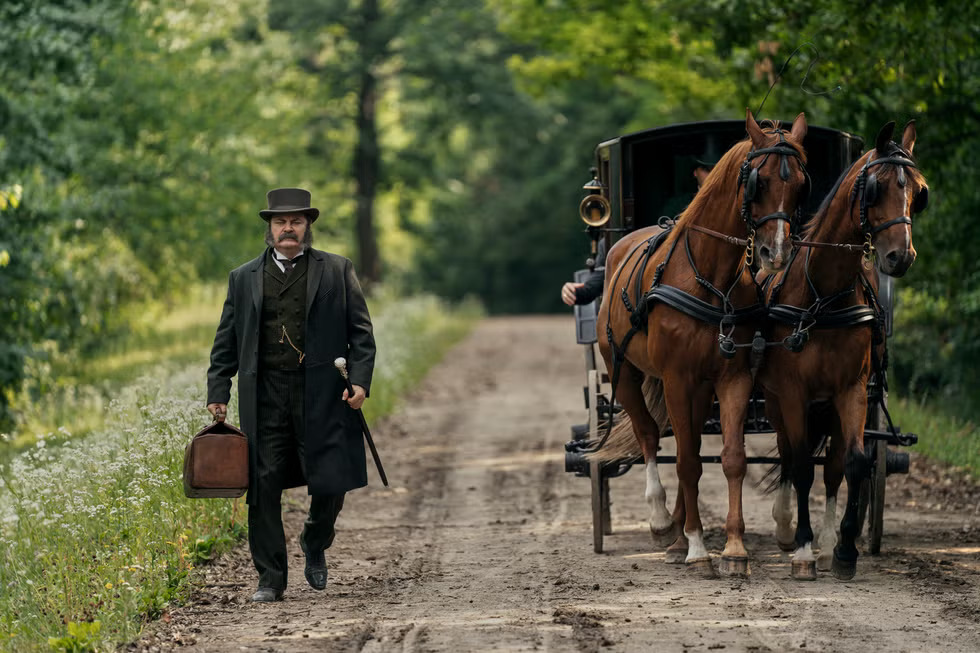 Death By Lightning (Slater Hall Pictures)
Obsession Assassination And Legacy Reshaping American Leadership Memory Through Tragedy And Loss
Guiteau’s obsession deepened as he stalked the corridors of power. At the time, the White House was open to the public, and presidents were expected to meet office seekers daily. Guiteau exploited this accessibility, repeatedly badgering aides, forging letters, and even briefly meeting Garfield himself. When his demands were finally and firmly rejected particularly by Secretary of State James Blaine Guiteau reframed his personal failure as a national betrayal, convincing himself that assassinating Garfield would somehow save the country.

In July 1881, Guiteau shot Garfield at a train station in Washington, D.C. The president lacked any meaningful security, reflecting the era’s naive belief that assassination was a risk reserved for monarchies, not democracies. Garfield initially survived the attack, as the bullet missed vital organs. However, his fate was sealed by outdated medical practices. Doctors repeatedly probed his wound with unsterilized instruments, dismissing emerging antiseptic science and ultimately causing fatal infections.
Modern historians widely agree that Garfield might have survived had proper medical care been applied. Physicians such as Dr. Charles Purvis, the first Black doctor to treat a U.S. president, urged antiseptic methods but were ignored by senior doctors like Dr. Bliss. Even Alexander Graham Bell’s early metal detector was undermined by professional arrogance. In this light, Death by Lightning presents Garfield not only as a victim of Guiteau, but also of medical ignorance and institutional pride.
Garfield’s death elevated Chester Alan Arthur to the presidency a role he never expected or sought. Surprisingly, Arthur underwent a moral transformation inspired by Garfield’s example and the gravity of national loss. Despite his roots in the spoils system, Arthur went on to champion civil service reform, dismantling the very practices he once benefited from. His presidency became an unanticipated but lasting legacy of Garfield’s influence, ensuring that some of Garfield’s ideals would endure.
The series concludes by contrasting legacies. Guiteau’s brain is preserved for science, yet his name fades into infamy, while Garfield’s promise lingers as a haunting absence. Lucretia Garfield emerges as a quiet hero, embodying dignity, intellect, and unfulfilled potential as a first lady who never had the chance to shape history. Death by Lightning ultimately argues that while Guiteau sought immortality through violence and achieved nothing, Garfield’s unfinished vision still resonates—inviting Americans to reconsider not only what was lost in 1881, but what might still be possible.