

Netflix’s Revelations is a South Korean psychological thriller that weaves a complex narrative around the themes of faith and reason. Directed by Yeon Sang-ho, known for Train to Busan, the film keeps viewers on edge with its intricate plot and morally ambiguous characters.
The story revolves around the disappearance of a young churchgoer, A-yeong, and the intertwining investigations of Pastor Min-chan and detective Yeon-hui. By the climax, the movie leaves audiences with multiple unanswered questions: Is Kwon Yang-rae dead? Can A-yeong be saved? And what exactly is the “one-eyed monster”?
Pastor And Detective Pursue Truth Leading To Climax Of Faith And Violence
The plot begins when Pastor Min-chan receives what he believes to be a divine revelation implicating ex-convict Kwon Yang-rae in A-yeong’s disappearance. Acting on this, Min-chan tracks Yang-rae after suspecting him in connection with his own son’s temporary disappearance.
Meanwhile, detective Yeon-hui, haunted by the memory of her deceased younger sister, independently investigates the missing churchgoer. As their paths converge, both Min-chan and Yeon-hui uncover uncomfortable truths about themselves and the others, creating a tension-filled narrative that blends psychological drama with elements of religious morality.
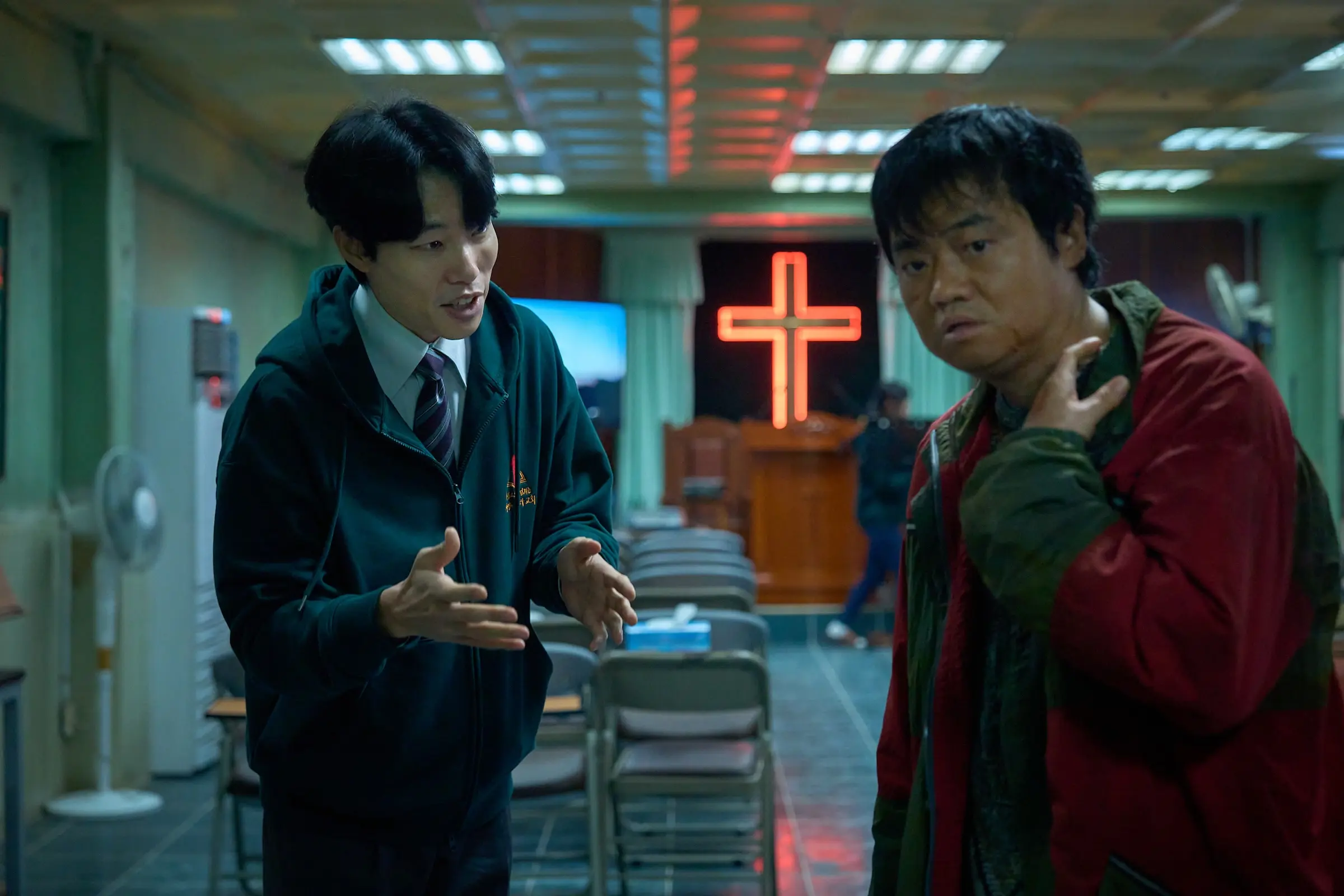 Revelations (Esperanto Filmoj)
The movie’s climax escalates when Min-chan confronts Yang-rae in a remote forest. Believing he is carrying out God’s will, Min-chan pushes Yang-rae off a ravine, seemingly killing him. Later, Min-chan learns his son is safe, prompting regret over his actions.
Yet, a vision of Christ convinces him that his violent act was righteous. Yang-rae, however, survives and is later kidnapped by Min-chan, who struggles between his religious conviction and the truth about A-yeong. The tension peaks when detective Yeon-hui intervenes, resulting in Yang-rae’s accidental death during a struggle, leaving only his cryptic last words about the “one-eyed monster.”
Yeon-Hui Uncovers Yang-Rae’s Trauma Symbolized By The One-Eyed Monster Window
The film provides clarity on Yang-rae’s cryptic phrase through Yeon-hui’s investigation. Consulting Yang-rae’s psychiatrist, Lee Nak-seong, she discovers that the “one-eyed monster” symbolizes the oculus window of Yang-rae’s abusive childhood home.

The window, shaped like a monstrous eye, is deeply tied to his trauma and triggers his violent behavior. This revelation highlights the psychological depth of the character and provides insight into the cycle of trauma, showing how past abuse can shape an individual’s actions in adulthood.
In the final moments, Yeon-hui uses the knowledge of the one-eyed monster to locate the building where A-yeong was held captive. Her persistence and investigative skills led to A-yeong’s rescue, providing a sense of closure amid the film’s dark and complex narrative.
Min-chan is taken into custody, and Yang-rae’s tragic story concludes, emphasizing the consequences of blind faith and unresolved trauma. Ultimately, Revelations blends suspense, psychological depth, and moral ambiguity, leaving a lasting impression while challenging viewers to question the balance between belief and reason.