
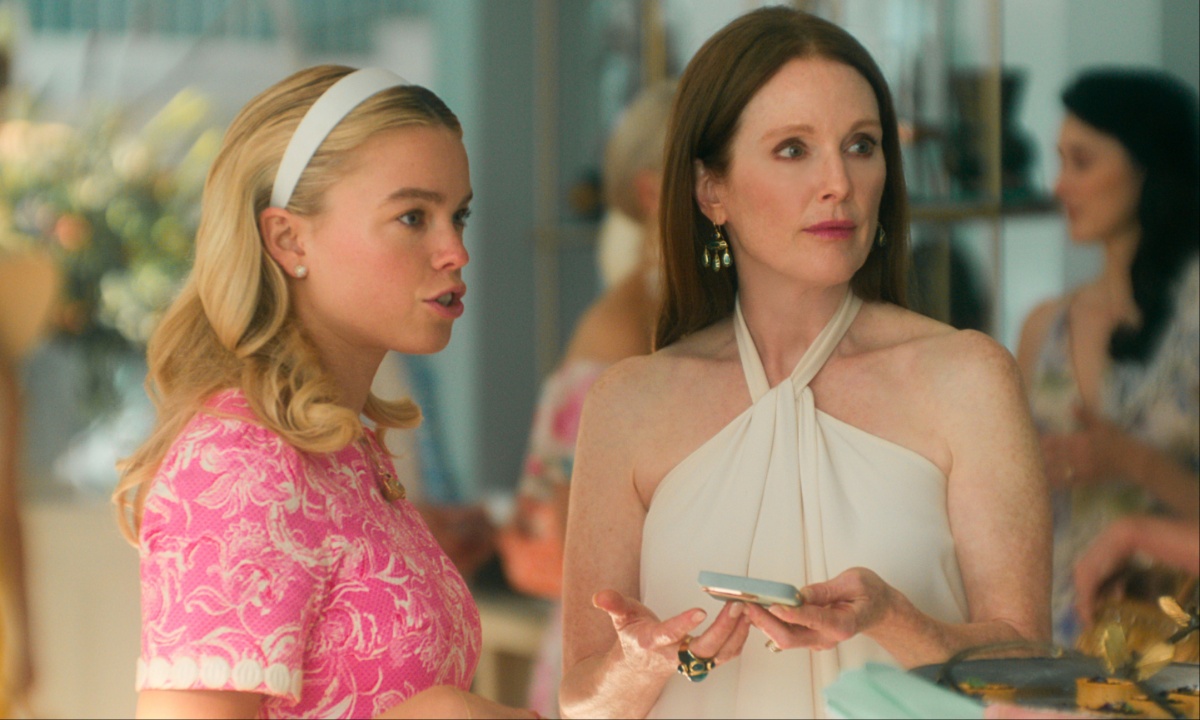
Netflix’s 2025 series Sirens, starring Julianne Moore, reimagines the legendary Greek sirens, transforming the myth from one of monstrous seduction into a story about women confronting societal double standards.
The show mixes black comedy, mystery, and metaphor to challenge traditional gender narratives, leaving viewers questioning who the real villains are. By flipping the script on mythological clichés, Sirens presents a story where women’s struggles are central, and men’s accountability, or lack of it, comes under scrutiny.
At its core, Sirens explores the dynamics of family, power, and gender. The series examines how women are often blamed for the consequences of men’s actions, drawing parallels to the mythical sirens, who were historically blamed for sailors’ deaths even when the sailors chose to approach the dangerous cliffs.
Across its five episodes, the show blends humour and suspense, using mythology as a metaphor for modern social issues. It critiques patriarchal norms, showing how women are held responsible for problems beyond their control while men are rarely questioned.
Devon Uncovers Island Secrets While Confronting Rumors, Lies, and Family Power Struggles
Adapted from Molly Smith Metzler’s play Elemeno Pea, the story centers on sisters Devon, played by Meghann Fahy, and Simone, played by Milly Alcock. Over a Labour Day weekend, Devon travels to an island where Simone works as an assistant to Michaela Kell, played by Julianne Moore, a wealthy philanthropist married to a billionaire.
Rumours circulate that Michaela murdered her husband’s first wife, Jocelyn, which casts a shadow over her character. As Devon tries to help Simone, she is forced to confront unsettling truths about Michaela, Peter, the manipulative husband, and the complex ties that bind the women to each other.
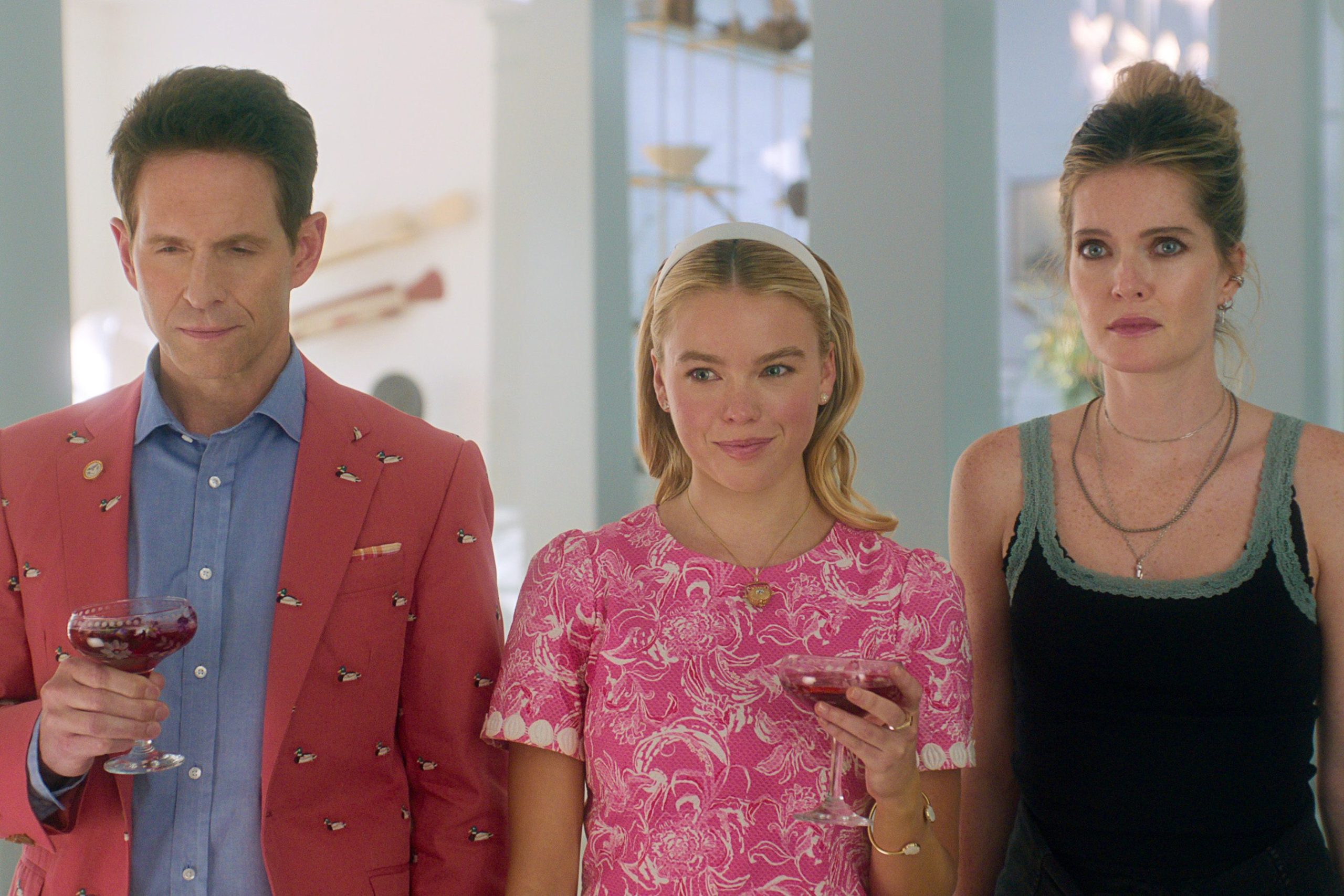 Sirens (LuckyChap Entertainment)
In the finale, it is revealed that Michaela did not murder Jocelyn, who is alive but living in seclusion after a botched plastic surgery. The show mirrors gothic fiction tropes such as the estranged or allegedly murdered first wife seen in Rebecca and Jane Eyre, using Jocelyn as a haunting but absent presence.
Michaela’s secrecy and the judgment she faces highlight a recurring theme. Women are frequently demonized for circumstances beyond their control, while men’s misdeeds are minimized or excused.
Simone, Michaela, and Peter Reveal How Women Face Consequences From Men’s Actions
Simone and Michaela share a bond that goes beyond a conventional boss and employee relationship, carrying hints of intimacy and mutual respect. This bond is tested when Peter, Michaela’s husband, shows interest in Simone. Michaela fires Simone to protect her marriage even though Simone is not at fault.
This incident reinforces a central theme of the series. Women often bear the consequences of men’s actions. Peter ultimately divorces Michaela, showing the imbalance in power that men can exercise over women.

By the end of the series, Simone steps into the role of Peter’s partner, fulfilling her desire for affection and validation shaped by a childhood of neglect. Devon chooses to remain behind to care for their father while also finding her own place, showing resilience and personal growth.
Michaela, stripped of wealth and status, leaves the island without clear prospects. The series emphasizes how women respond differently to societal pressures and personal history while highlighting the costs of patriarchal systems.
Sirens challenges the traditional narrative of female villainy. The women in the series are neither manipulative nor evil. Michaela is not a cult leader, Simone is not opportunistic, and the sirens’ legendary songs are presented as cries for help rather than deadly lures.
By telling the story from the women’s perspectives, the series encourages viewers to reconsider myths, stereotypes, and the ways society assigns blame. Sirens is a thoughtful commentary on gender, power, and justice.