

The finale of The Chair Company leaves viewers grappling with complex narrative threads, blending psychological thriller elements such as red herrings, unreliable narrators, and twist reveals. The story immerses audiences in a labyrinth of events, prompting questions that remain unanswered even after extensive discussion online. Intense focus on uncovering hidden meanings mirrors the experience of the characters, showing how obsession can lead to neglecting real-world responsibilities and mental well-being.
The central theme is that while suspicious events occur throughout the series, they do not form a single, unified conspiracy. Each incident is isolated and driven by ordinary people living unfulfilling lives who mistakenly believe they are part of a grander scheme. This creates the illusion of a larger plot when overlapping personal motives and coincidences are misinterpreted as connected. The tension arises from perception rather than orchestrated manipulation.
A recurring motif is the tendency to find patterns where none exist. Characters who actively search for signs, symbolized by red balls, inevitably see them. Loud, conspicuous behavior and overanalysis amplify the perceived connections, turning mundane or unrelated events into evidence of a supposed conspiracy. This psychological bias demonstrates how humans often manufacture meaning from coincidence.
 The Chair Company (HBO)
Head Injuries, Surreal Events, and Workplace Grudges Challenge Ron’s Perceived Reality
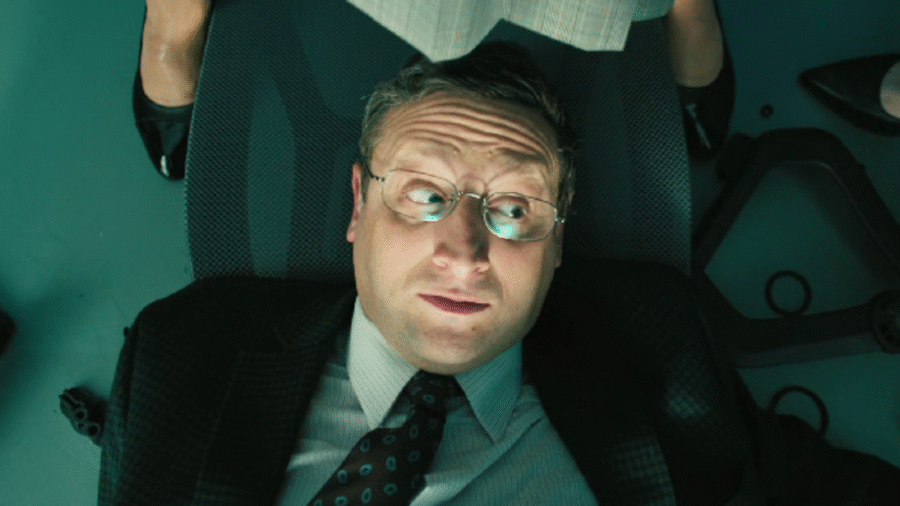
Ron Trosper sustains multiple head injuries, including falling from a defective chair and being struck by a pipe, leading some to question his reliability as a narrator. While these incidents cause temporary confusion or shock, the narrative indicates that his perception is largely intact. His lapses in judgment are limited, suggesting that the events of the series are not purely the product of hallucination or mental impairment.
The finale introduces surreal sequences, including encounters with Ron’s dog’s original owner and a ghoulish figure in a shed. The cold open featuring Stacy Crystals, a con man killed at a wedding, anchors the story in reality. Connections to Jeff, the CEO, and documented shell companies suggest that these events genuinely occurred. Ambiguity remains, but the sequence functions as necessary exposition rather than fantasy.
Fisher Robay’s office environment is filled with personal animosity, which drives much of the conflict. Ron’s public mishaps, such as falling from a chair and triggering HR investigations, intersect with personal history, particularly with Amanda, who holds a long-standing grudge from high school. This workplace tension demonstrates how interpersonal resentment can escalate into manipulation and harassment, intensifying the perception of a larger conspiracy.
 The Chair Company (HBO)
Hidden Motives, Personal Ambitions, and Overlapping Agendas Shape Complex Series Narrative
Douglas, a colleague resentful of Ron’s position, manipulates circumstances to humiliate him, suggesting demotions under the guise of concern. These actions show the impact of jealousy and personal vendettas on office dynamics. Douglas benefits from Ron’s struggles, showing how private grudges and ambitions can have real consequences on others’ lives.

Jeff, the CEO, initially appears involved in conspiracies through his connection to Stacy Crystals and shell companies. However, his involvement stems more from insecurity and unfulfilled dreams of musical success than deliberate malice. His poor judgment entangles him in questionable activities, demonstrating how personal ambition and ego can create complications that resemble conspiratorial patterns without intentional wrongdoing.
Financial wrongdoing occurs through Alice Quintiana, who embezzles funds via Tecca Chairs to support Barb’s company. Mike Santini’s complex motivations, violent yet sincere, mirror Ron’s obsession with legacy and significance. These parallel fixations show how individuals pursue purpose through causes, sometimes causing confusion or harm to themselves and others. The convergence of these motivations produces overlapping narratives that appear connected.
The series portrays a world of interconnected yet independent personal agendas. Real corruption exists, but it is isolated and circumstantial. The apparent conspiracy results largely from perception and overinterpretation, driven by obsession and a search for significance. Coincidences and overlapping lives give the illusion of coordination. Characters exploit or are ensnared by these overlaps, creating a complex narrative where searching too hard for meaning ensures the discovery of patterns, whether or not they hold real significance.