
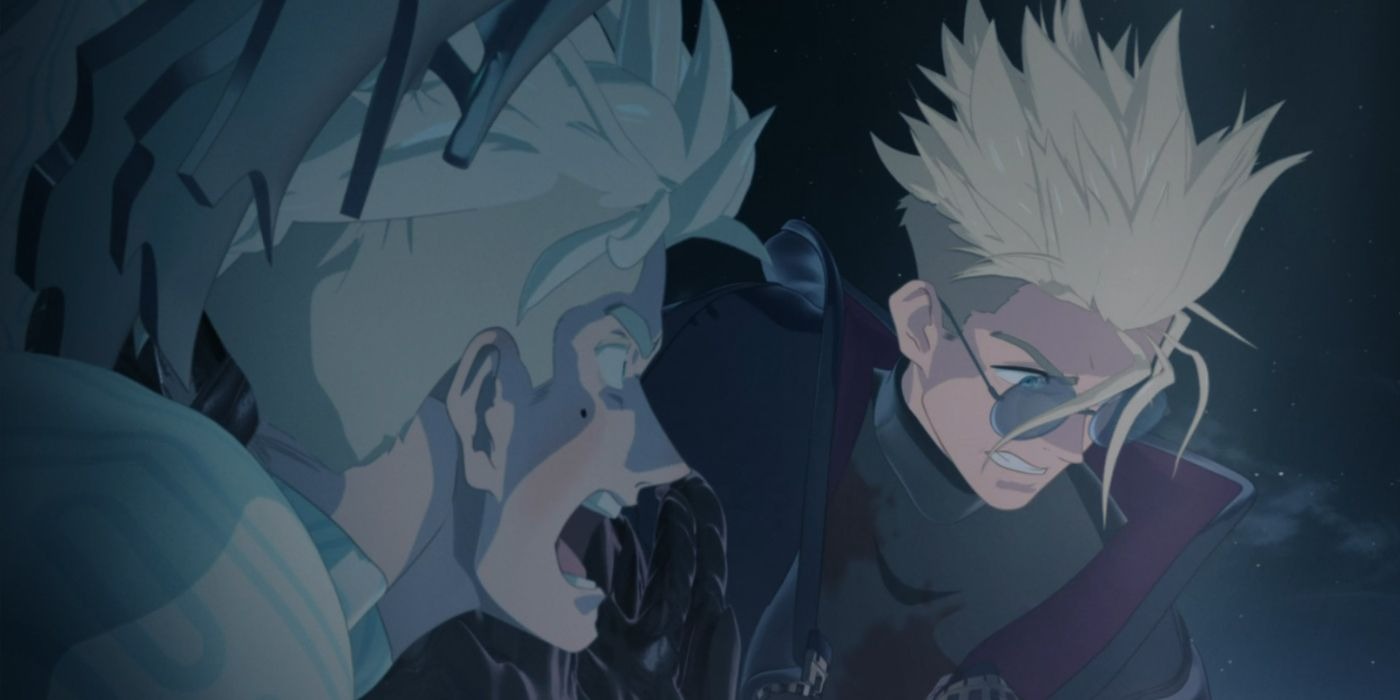
Trigun Stampede reached its final moments under a desert sun where choices carried more weight than gunfire. From the first episode, the story followed Vash the Stampede as he wandered through chaotic towns on a dying planet. Love and violence met in dusty streets, and the final sequence pulled all the threads together.
The last episode did not just end the journey—it asked whether mercy could fix broken hearts and barren lands. Vash’s path over the season became more than a series of wild gunfights. It became a struggle between forgiveness and fate.
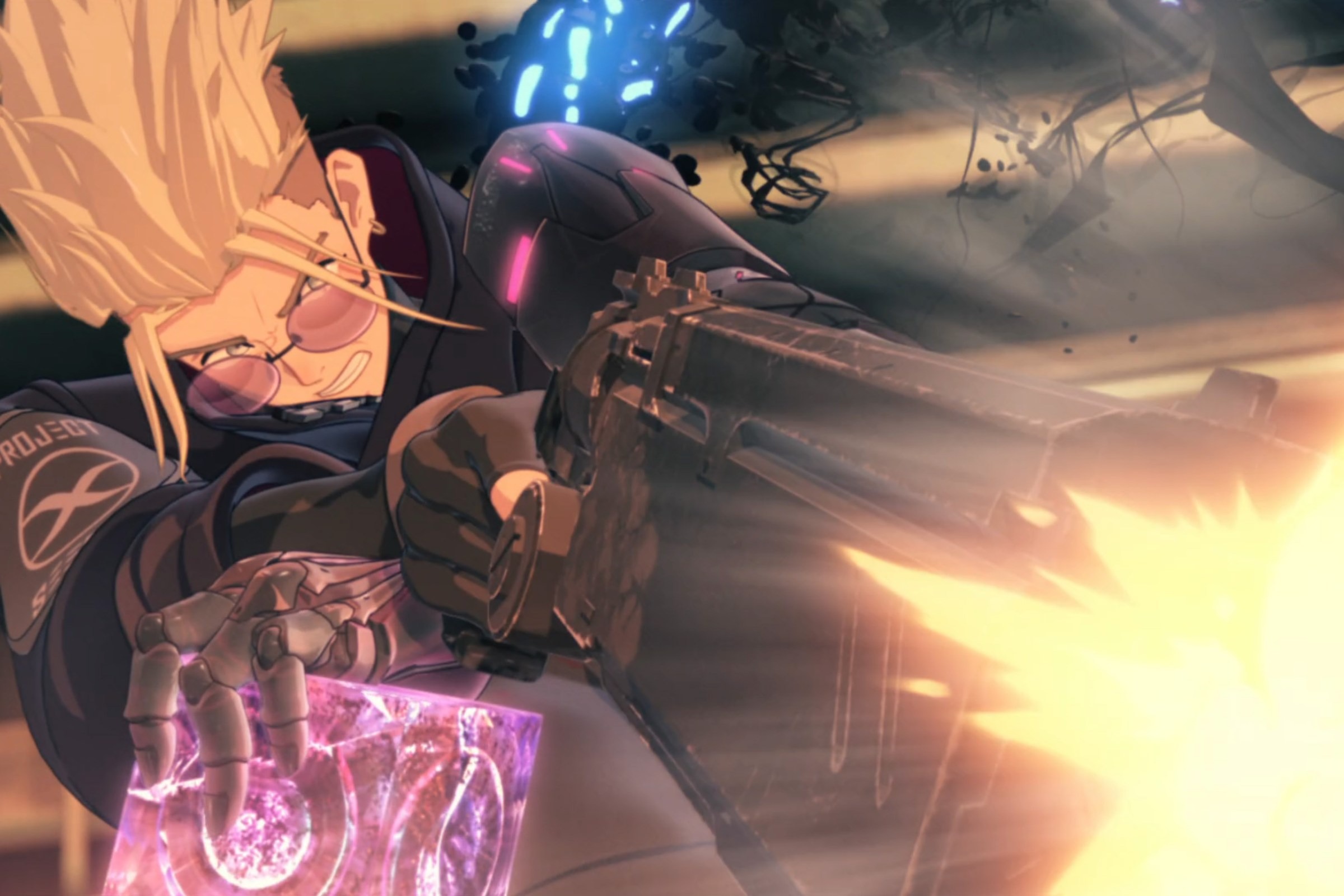 One last standoff ends with more silence than cheers (Photo: Trigun Stampede/Studio Orange, Toho)
Each scene added to the tension: every flash of his coat, every tense standoff, every whispered apology after a bullet flew. That tension built up in the final showdown. But victory did not come with applause.
Instead, the ending came with a moment of clarity—where saving one life could echo into countless others. The desert was empty, but Vash’s choice made it feel like hope still had room to grow.
Vash and Knives Confront Their Pain
When the final battle began, it was clear that the showdown between Vash and his brother Knives had been long coming. Both had reasons to fight beyond hatred. Knives saw destruction as the only solution to a world full of pain. Vash believed that pain deserved forgiveness and that mercy might plant seeds of peace.
As they came face to face, the silence spoke louder than their guns. Each remembered a childhood that held love only to end in ruin. Knives’ rage, born from feeling abandoned, met Vash’s sadness, born from loving someone who could not save him.
When the fight finally happened, it was less about bullets than it was about memories. Their swings, their deflections—it all felt like a dance between two lost souls who once loved each other. At the moment Vash dropped his weapon and offered his hand, it became an offer not only for peace between them, but for peace in a world that had lost its way.
Knives’ refusal of that hand, even as tears formed, showed how deep despair ran. But Vash’s choice also showed how far forgiveness could reach—even if the other person was not ready.
Meryl and Milly Choose Hope Over Fear
Meryl and Milly represented the last thread of Vash’s connection to human belief. From the beginning, they followed him not just as reporters but as witnesses to his kindness. When the final moments arrived, both women faced the darkest side of humanity. They stepped into the path of bullets and chaos not with guns, but with faith in Vash’s ideals.
When gunmen surrounded them, they refused to run. They held each other close, expecting Vash to turn away. But he did not hesitate. He chose to take the bullet in their place, proving that his love had grown beyond words. This scene was more than rescue—it was proof that standing together mattered even when the world had nothing left to offer.
Meryl’s tears and Milly’s shaky voice after the confrontation did more than show emotion. They showed belief. They proved that someone’s ideals could survive—if people were willing to hold to them when it hurt most. Their loyalty became something everyone watching could feel, and it demanded thought. Could love be stronger than fear in a world shaped by greed?
The Town Finds Room for New Roots
The towns along Vash’s route were so often places of abandonment. People carried scars, and law was kept only by the strongest gun. But after Vash’s last fight, something changed. He left the town not in ruins, but with seeds planted for something better.
Scenes showed townsfolk stepping out of hiding, offering water, rebuilding walls, planting trees. A place once full of danger became full of beginning. A woman apologised to a man she had blamed for the violence. Two children picked up a book on Vash’s “Humanoid Typhoon” reputation.
A dusty well began to flow again. That transformation felt earned. It came from one act of mercy that echoed across a town used to violence as the only answer.

It did not feel like a perfect ending. The walls were still cracked. But the change was there. It had roots. A shot rang out in that final moment, not to show danger, but to show life had returned to the streets.
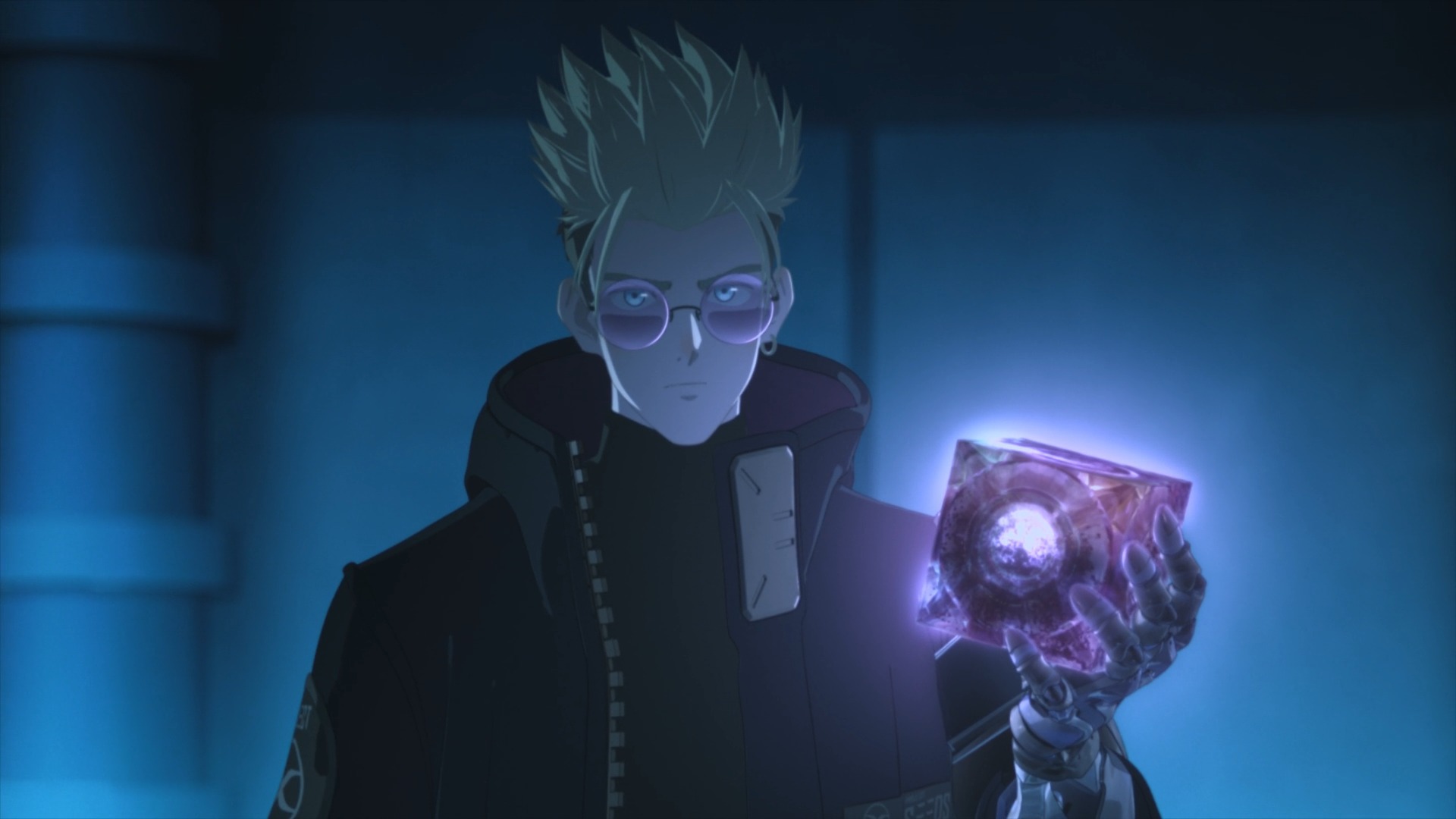 Vash walks away from violence but not from consequence (Photo: Trigun Stampede/Studio Orange, Toho)
The Desert Holds a Whisper of Tomorrow
After the final confrontation, Vash walked into the desert. Alone but not lonely. The sun set behind him, but his shadow pointed forward. Scenes showed footprints behind him—Meryl, Milly, the townsfolk. Vash was not on his own. He carried the echo of every kindness he had shown and every life he had chosen not to destroy.
That offered a quiet reminder: when someone chooses compassion in a world full of violence, they inspire more than they know.
A small green sprout emerged near his boot as he passed. It was subtle. But it spoke louder than any gunshot. It said the desert could bloom again. It said mercy could outlast bullets. It said hope was not just a word—it was a choice someone was making, step after dusty step.
Every Farewell Carries a Promise
The ending did not end at the horizon. Vash looked back once. Then forward again. The camera lingered on him, not just as a legend of gunfire, but as someone who chose forgiveness in a place that valued survival over everything else.
Trigun Stampede’s finale did not tie every story up neatly. It did not show every town rebuilt or every feud settled. Instead, it let the choice of one man stand in a barren world and ask whether the desert could remember what it once was.
That sense of unfinished business did not feel empty. It felt real. Because healing always starts at the edge. Trigun Stampede is available for streaming on Crunchyroll.