

The sixth and final season of The Handmaid’s Tale closes with a blend of triumph and melancholy. The long-awaited uprising against Gilead finally erupts, allowing the enslaved women to strike a powerful blow against their oppressors. However, the victory is incomplete. Gilead remains wounded rather than destroyed, and the emotional scars carried by the characters linger. The final chapter reflects both the joy of liberation and the high cost of survival, especially for June, whose journey began as a voiceless handmaid stripped of identity.
Although rooted in Margaret Atwood’s 1985 novel, the series expands significantly on the source material. June’s evolution, portrayed intensely by Elisabeth Moss, charts her transformation from captive to fierce resistance leader. Across six seasons, she confronts trauma, motherhood, loyalty, and rage, all while building fragile alliances with other women trying to endure Gilead’s brutality. The final season positions June as both a survivor and a symbol, someone who fights not only for her own children but also for the generations who stand to inherit a world reshaped by her defiance.
The climax of the final season centers on a full-scale revolution within Gilead. The oppressed women rise up, seizing their moment to revolt. Joseph Lawrence makes the ultimate sacrifice by detonating a bomb on a plane carrying Boston’s Gilead commanders. The explosion kills Nick, father of June’s daughter Nichole, and marks a devastating but decisive shift. With its leaders dead, Boston falls to the rebels. June declares the city part of America again, even as Gilead maintains control in other regions. The finale ends with rebel forces preparing for a prolonged battle to take back the rest of the country.
 Elisabeth Moss as June Osborne (The Handmaid’s Tale/MGM Television)
June Intensifies Search for Hannah While Allies Return and Families Reunite Amid Resistance
June’s relentless mission to reunite with her daughter, Hannah, remains central to the finale. She is reunited with her younger daughter, Nichole, when her mother, Holly, joins the rebellion in Boston. Yet Hannah, now renamed Agnes, remains in Colorado with her foster parents. Tuello informs June that Hannah’s foster father has been promoted and will soon move the family to Washington, D.C. This brings Hannah physically closer but not safely within reach. June rejects the idea of passive waiting. She vows not only to rescue Hannah but also to liberate all the children stolen by Gilead. Her determination bridges the narrative toward The Testaments, the upcoming sequel series based on Atwood’s 2019 novel.
Emily returns in the finale, portrayed once again by Alexis Bledel after her absence in earlier seasons. Now working as a Martha in Bridgeport, a center of rebellion, she reconnects with June as women rebuild their lives in the newly liberated Boston. Together, they reflect on their survival and the improbable nature of their shared freedom. June mourns the years stolen by Gilead, while Emily encourages her to see how far they have come. Their conversation embodies the finale’s balance of sorrow and resilience, acknowledging both the weight of the past and the possibility of a freer future.
Janine, one of the series’ most tragic and resilient figures, finally escapes Gilead. Injured but alive, she is delivered to the border by Aunt Lydia and Naomi, two women long complicit in enforcing the regime’s cruelty. In a moment that reveals unexpected complexity, Lydia and Naomi reunite Janine with her daughter, Charlotte. June thanks Lydia despite their fraught history, offering a brief but meaningful gesture of grace. Janine’s survival and reunion with her child provide one of the finale’s most emotionally satisfying resolutions, honoring her endurance across six seasons of suffering.

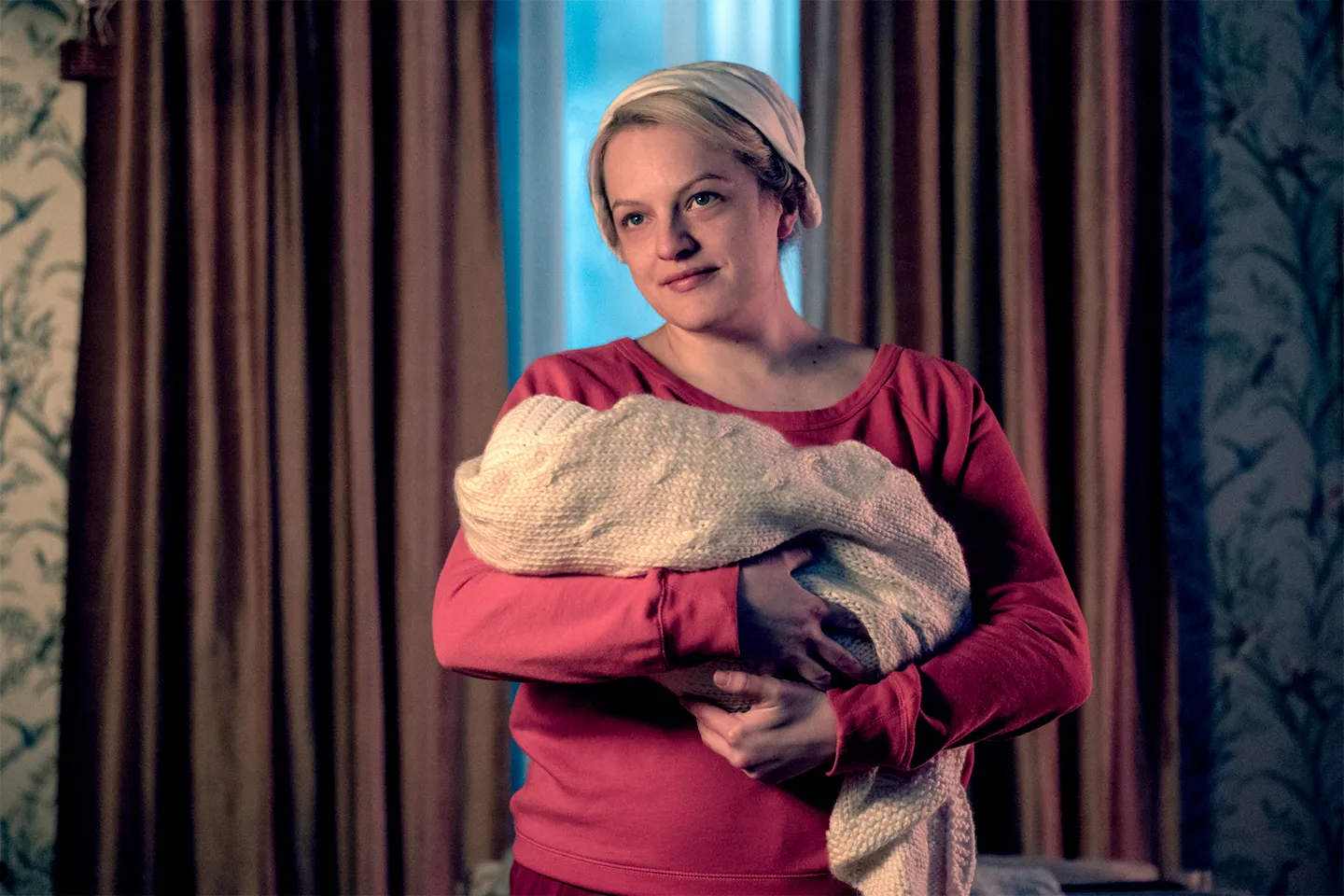 Elisabeth Moss as June Osborne (The Handmaid’s Tale/MGM Television)
Serena and June Face Reckoning, Forgiveness, Farewell, and the Power of Storytelling
Serena Joy confronts the consequences of her past with an honesty she once lacked. With Gilead closed to her and no country willing to accept her, she faces a future of displacement and uncertainty. Before she is taken to a United Nations refugee camp, she apologizes to June for the cruelty she inflicted during the early seasons of the series. June accepts the apology, recognizing that rebuilding requires acts of forgiveness as well as justice. Serena enters her uncertain future with her son Noah in her arms, stripped of power but finally aware of the harm she caused.
June and Luke choose to part ways, recognizing that the long years of war and separation have transformed them into different people. Luke intends to support the resistance in New York, while June remains committed to finding Hannah and dismantling Gilead. Their farewell is filled with respect rather than resentment. June also mourns Nick, acknowledging that his violent life led to his own destruction. Serena’s reassurance that he would have chosen June if he ever had a real choice offers June a sense of emotional closure, even as she moves forward without him.
The series ends with June returning to the ruins of the Waterford house, the place where her nightmare began. As she walks through the wreckage, she takes out a tape recorder and begins to narrate the opening lines of the series. By speaking the words in her own voice, she reclaims a story that once belonged to her captors. The closing declaration, “My name is Offred,” becomes a defiant reminder of what she survived and what she rejects. The finale positions storytelling itself as a vital act of resistance, one that June undertakes for her daughters and for all who must continue the fight.