
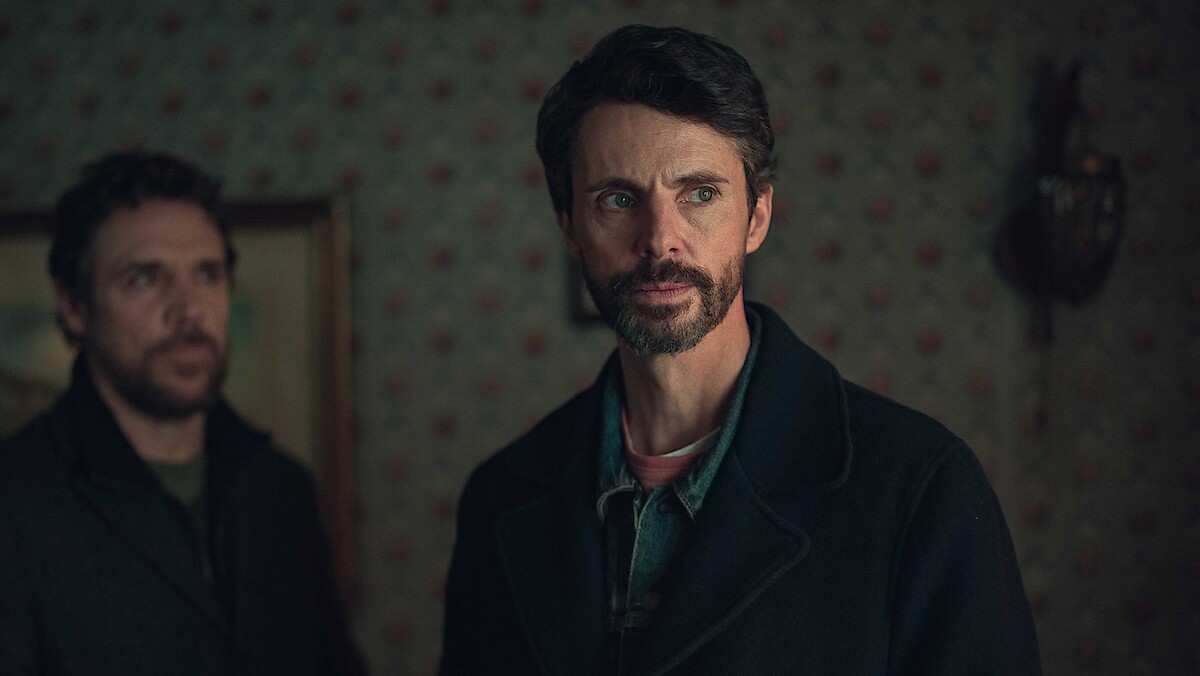
Dept. Q is a gripping Netflix crime series that combines slow-burn tension with dark humor. At the center is DCI Carl Morck, a sarcastic yet grudgingly charming detective played by Matthew Goode. The show avoids tidy resolutions, instead delivering a messy, bittersweet ending that leaves viewers both satisfied and eager for more. Loosely based on Jussi Adler-Olsen’s Danish novels, the series relocates the story to Scotland, giving it a unique local flavor.
Merritt Lingard’s Disappearance Exposes Twisted Family Secrets And A Tense Psychological Confrontation
The core mystery revolves around Merritt Lingard, a prosecutor who has vanished under horrifying circumstances. Morck and his team must unravel the twisted web surrounding her disappearance. Chloe Pirrie portrays Merritt with intensity, capturing her vulnerability and determination. The narrative keeps audiences guessing, revealing that her abduction is far more personal than initially apparent.
 Dept. Q (Sony Pictures Television)
The kidnappers, Lyle Jennings and his mother Ailsa, are driven by obsession and twisted family loyalty. Lyle, once involved with Merritt’s teenage boyfriend Harry, perpetrates a violent crime that spirals into years of vengeance. The duo kidnaps Merritt and confines her in a pressurized chamber on an isolated, decaying estate, setting the stage for a tense, psychologically charged confrontation.
High-Stakes Rescue And Unresolved Mysteries Shape Dept. Q’s Gripping, Suspenseful Conclusion
In a thrilling climax, Morck and his partner Akram locate Merritt just in time. Lyle is killed in the confrontation, while Ailsa chooses suicide over arrest. Merritt is safely rescued and reunited with her now non-verbal brother, William. The sequence balances suspense, action, and emotional resolution, delivering one of the series’ most gripping moments.

Morck uncovers a secondary plot involving Scotland’s Lord Advocate, who sabotaged a murder prosecution to protect his daughter. Morck uses this leverage to secure funding and promotions for his team, blending justice with strategic negotiation. Meanwhile, the unresolved Leith Park shooting remains a lingering mystery, promising new challenges and threats in future seasons.
Dept. Q succeeds with its dark, atmospheric storytelling, complex characters, and intricate plotting. The show embraces Nordic noir elements—bleak visuals, moral ambiguity, and hidden secrets—while adding a distinct Scottish flavor. With a competent and emotionally layered cast, including Goode and Alexej Manvelov, the series rewards patient viewers and sets the stage for more suspenseful storytelling in subsequent seasons.